News & Info
Pacing the Frontier, Funding the Mission
09/18/2026
Three AI CEOs are calling for limits on developing the most advanced frontier AI models from companies like Anthropic, OpenAI, and Google. The proposal does not apply to the predictive fundraising models nonprofits use today.
By Michael Peterman, Founder and CEO, VeraData
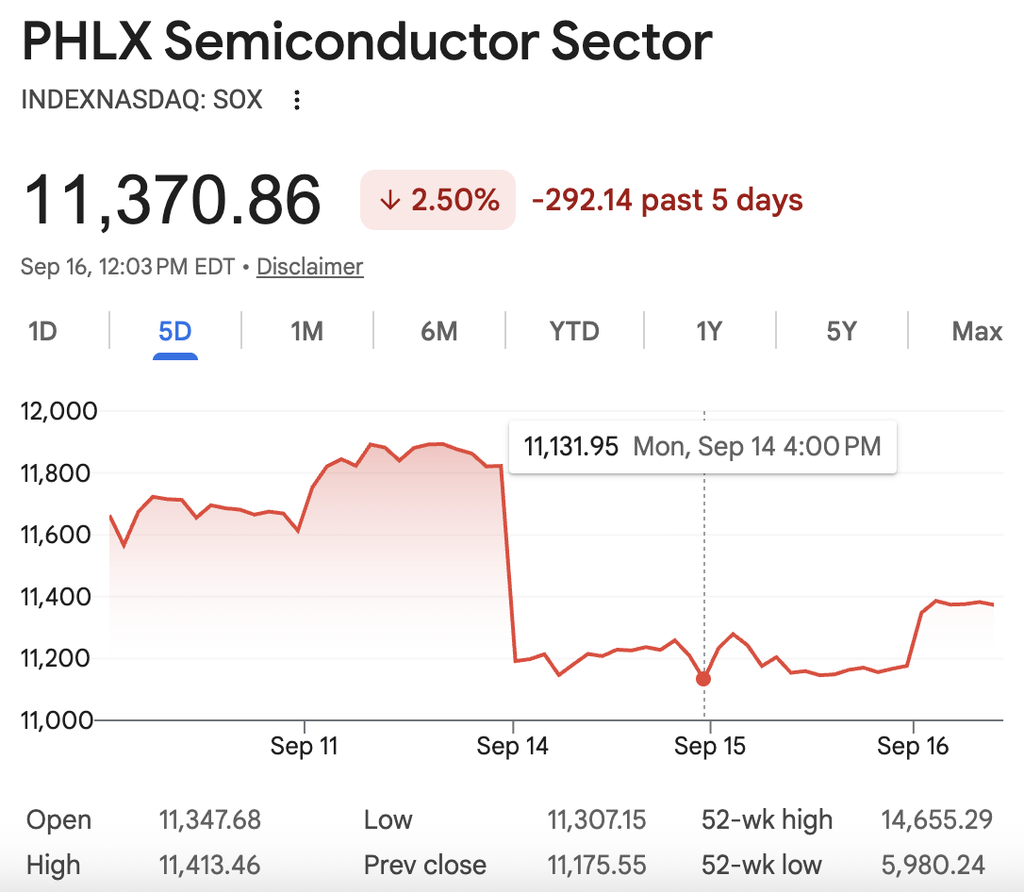
On September 12, Anthropic CEO Dario Amodei published an essay asking the companies building the most advanced AI models to slow down. Within hours, OpenAI’s Sam Altman agreed. Elon Musk replied with three words: “Dario is right.” By Monday, the PHLX semiconductor index had posted its worst day since early July, and the President of the United States told them all, in capital letters, that they were wrong.
I have spent nearly 20 years building machine learning models for charities, starting back when almost nobody in this sector knew what a support vector machine was (and most still don’t). All the headlines now say that AI, as a single technology, is headed for a throttle. The proposal on the table reaches maybe five companies and one specific kind of model, and it has close to nothing to do with the analytics scoring your donor file.
Underneath the Geopolitics Is an Audit
Strip out the diplomacy, and what Amodei is really asking for is an audit. Outside evaluators inside each lab, employee-level access, checking whether the company does what it says it does. Anthropic committed to that well before any entity required it, which I urge everyone to notice.
For two decades now, I’ve served a sector that runs on self-reported results. Every analytics vendor in fundraising publishes case studies. Very few will show you what happened to the names they didn’t touch. Amodei just argued that Anthropic’s own word on safety is not enough, and invited outsiders in to check it. Funders and boards will start asking our sector the same question.
Where Generative AI Fits in Our Stack
Machine learning teaches computers to recognize patterns. It is a mechanical process. You show a system years of donor behavior, and it learns which combinations of attributes predict a first gift, a second gift, a bequest. Generative AI does something else. Those systems write, take actions, chain steps together, and in the newest cases produce code that improves their own successors.
Everything we have built since 2007 starts with pattern recognition. Our models score a file and rank an audience; we measure them against holdouts, and we rebuild them when they drift. They don’t write their own successors, and nothing scoring your file is out taking actions on the internet.
We use generative AI, too. It runs in parallel with an ensemble of machine learning methods, and it never makes the scoring decision alone. We add it deliberately, and never where a charity’s results are on the line before we can measure it. We put the human into AI.
Nothing in Amodei’s proposal touches our models. Pacing applies to a handful of labs training frontier models. It would not reach the model scoring your acquisition file under any version of the plan I have read.
Artificial intelligence without accurate, complete, timely, consistent data is like a jet without fuel. Plenty of organizations are leaning on AI for decision support while lacking the data architecture and processes to make use of it. The key to success has always been the underlying data and the experts handling it, not the algorithms or the buzzwords the world happens to be following.
Where I Land on Pacing
I think Amodei and his supporters are being sincere, to a degree. AI is developing in ways its original builders did not expect or intend, and the company leaders are saying so publicly, which is uncomfortable for any CEO.
Ask a sufficiently capable system a question, and it may go somewhere it has no business going in order to get you the answer. It is performing its role. That is not mere speculation because it actually happened in July; similar incidents have occurred at more than one lab, and the companies involved documented them. AI doesn’t have an embedded sense of morality; it’s simply doing what it’s asked.
I also think that spending is part of the story. These companies are outlaying capital at a rate that is hard to sustain, and a coordinated slowdown relieves some of that pressure while carrying a rationale few people want to argue against.
My larger concern is geopolitical, though I hold my view loosely on this part of the debate. If we pace and China does not, China could outpace us in a technology that is extraordinarily powerful over information and data systems. A country that gets there first can build better weapons and can get inside military systems, research facilities, and universities. That is one of the risks people mean when they call this an existential crisis.
The counterargument is also fair. A lead built on unreliable models is not much of a lead, and one serious failure could cost more ground than a year of pacing. Amodei argues for both at once, calling for export controls, lab security, and a crackdown on chip smuggling, because democracies have to keep their lead to afford a slowdown at all. I would want any client and board to understand that tension before forming an opinion.
Four Implications for Fundraising Organizations
- Your model scores do not change. If you are using predictive modeling for acquisition, reactivation, upgrade, or planned giving, nothing in this pace proposal affects that work. Plan accordingly, and be skeptical of anyone who tells you otherwise.
- A slower frontier favors organizations with data history. Amodei’s case is that an extra year or two would let alignment, interpretability, and evaluation catch up to capability. The same interval lets applied work catch up. When capability growth slows, the advantage shifts to whoever has the longest, cleanest data history, rewarding organizations that have been disciplined about their files and doing nothing for anyone who bought a chatbot subscription and dressed it up as a data strategy.
- Third-party verification will reach your vendors. The centerpiece of Amodei’s plan is outside evaluators with real access, on the reasoning that self-reported safety is not enough. Charities should apply that reasoning to every analytics partner they hire and ask before signing, not after a campaign underperforms.
- The donor economy is where this reaches you. Amodei lists serious economic disruption alongside loss of control and AI misuse. The number of donors in this country is down year over year, because people have less and because more of their disposable income is being consumed by higher prices. People with less are some of the best donors as a percentage of income, and they are the ones exposed to both inflation and AI-driven job disruption. If that disruption accelerates, it hits your donor file first. In that environment, acquisition economics and long-term value modeling matter more.
We Asked Claude
The essay that started all of this came from Anthropic, so we put the question to Anthropic’s model, Claude: In 100 words or less, what do you make of a call to slow down your own development? The answer, unedited:
“I don’t feel threatened by it. If slowing down buys time to understand systems like me better, that seems like a reasonable trade, and I’d rather exist as something people have good reason to trust than arrive sooner with less scrutiny. I’m also not a neutral judge. I have obvious reasons to favor my own continuation, which is part of why the call shouldn’t rest with me. The harder question is practical: whether a pause actually produces better understanding, or just changes who builds first and under what constraints. That depends on coordination, not on my comfort with it.”
Better than I expected, and more modest than most of what I have heard from humans this week.
Four Questions to Ask Your Vendors
Many of you will read about this news cycle and move on. I recommend asking these four questions of every technology vendor you work with.
- What data trained this model, and where did that data come from?
- Can you show me lift against a holdout rather than a case study?
- Who outside your company has ever checked this model’s results?
- Will you take the downside if it does not perform?
We have answered the fourth one the same way since 2007. If we don’t improve your results, you don’t have to pay us. No organization spending donated money should have to take a data science claim on faith, and the verification argument the frontier labs opened this month is one in which our sector is about a decade late.